3 Types Of Bluebell Flowers Perfect For Every Bouquet
By Singapore Florist Editorial TeamThe bluebell is a flower that captures the heart with its simple grace and vibrant colour, signalling the arrival of spring. While many of us recognise its classic bell shape, not all bluebells are the same.
Understanding the distinctions between the native English bluebell, its robust Spanish cousin, and their hybrid is key to appreciating their unique beauty.
This guide will walk you through the main types of bluebells, how to tell them apart, their symbolism, and how you can enjoy them in your own home or garden.
Understanding the Bluebell Family
When we talk about the most common bluebells, we are usually referring to flowers from the genus Hyacinthoides. These enchanting perennials are part of the asparagus family, Asparagaceae, and are famous for creating breathtaking carpets of blue and violet across woodland floors in early spring.
Native to Western Europe, these bulbs thrive under the canopy of deciduous trees, flowering before the leaves grow thick and block out the sunlight. They are a cherished and iconic part of the natural landscape, particularly in the United Kingdom, which is home to a significant portion of the world's bluebell population. Their yearly return is a beloved natural event, drawing people to woodlands to witness the spectacular floral display.
1. The Native English Bluebell (Hyacinthoides non-scripta)
The English bluebell is the true, native bluebell of Britain and parts of Western Europe. It is a delicate flower steeped in folklore and is a protected species, making it illegal to pick them from the wild. Its presence is often an indicator of an ancient woodland, a testament to its deep connection with the natural history of the land.
Defining Characteristics
The English bluebell has several distinct features that set it apart. The most noticeable is its deep violet-blue colour, a rich and intense shade that is truly captivating. The flower heads have a graceful habit of drooping or nodding to one side of the stem, as if bowing their heads. This elegant curve is one of its most reliable identifying traits.
Each individual flower is a narrow, tube-like bell with petals that curl back tightly at the tips. If you get close, you will be greeted by a strong, sweet, and enchanting fragrance that fills the air. Another subtle but key identifier is the colour of its pollen; if you were to look inside the flower, you would find the pollen is a creamy-white or pale yellow colour. The leaves are slender, glossy, and a vibrant green, adding to its overall delicate appearance.
Habitat and Symbolism
This flower is intrinsically linked to ancient woodlands. It thrives in the dappled shade and moist, nutrient-rich soil found in these long-established forests. Its strong association with this habitat makes it a symbol of the wild, untamed beauty of nature.
In the language of flowers, the English bluebell holds deep meaning. It symbolises humility, constancy, gratitude, and everlasting love. In folklore, it was often called the "fairy flower," as it was believed that fairy rings were created where bluebells grew, and that to hear a bluebell ring was to summon fairies.
2. The Spanish Bluebell (Hyacinthoides hispanica)

The Spanish bluebell, as its name suggests, is native to the Iberian Peninsula, which includes Spain and Portugal. It is a more robust and vigorous plant than its English relative, which has led to its popularity in gardens around the world. It is the type most often sold in garden centres and used by florists due to its hardiness and straighter stems.
Defining Characteristics
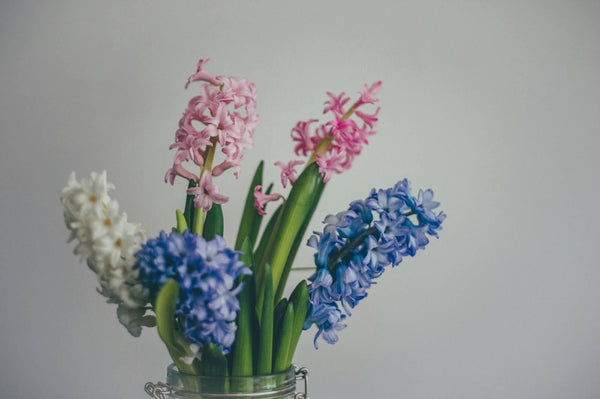
The Spanish bluebell presents a much bolder and more upright form. Unlike the English variety, its stem is stiff and erect, with flowers arranged all around it, facing outwards. The individual bell-shaped flowers are more open and conical, with petals that flare out more gently at the tips.
While they are beautiful, they lack the strong, sweet perfume of the English bluebell; most Spanish bluebells have little to no scent at all. Their colour is typically a paler, more sky-blue shade, and they are also commonly available in white and pink varieties.
A key difference lies inside the flower: the pollen of a Spanish bluebell is distinctly blue or sometimes greenish. Its leaves are also noticeably broader and less glossy than those of the English bluebell.
A Common Garden Variety
The resilient nature of the Spanish bluebell has made it a favourite for gardeners. It can tolerate more sunlight and a wider range of soil conditions than the English bluebell, making it easier to grow successfully in a typical garden setting. This hardiness, however, is also the source of a significant environmental issue, particularly in the UK.
3. The Hybrid Bluebell (Hyacinthoides x massartiana)
When English and Spanish bluebells are planted near each other, they can cross-pollinate to create a hybrid. This hybrid plant, Hyacinthoides x massartiana, possesses a mixture of characteristics from both parent plants, which can often make it difficult to identify with certainty.
The Mix of English and Spanish
A hybrid bluebell might have the upright stem of a Spanish bluebell but the darker blue colour of an English one. It might have flowers on just one side of the stem, but they may be more open and less curled at the tips.
The scent is usually very faint or non-existent, and the pollen is typically a pale blue, sitting somewhere between the creamy-white of the English and the dark blue of the Spanish. These mixed traits create a spectrum of appearances, blurring the lines between the two original species.
The Issue of Invasiveness
The hybrid bluebell is a particularly vigorous plant, even more so than its Spanish parent. This has become a serious conservation concern. When hybrids escape from gardens and grow in the wild, they can outcompete the more delicate native English bluebell for resources like light and space.
Even more concerning is the genetic threat. The hybrid can cross-pollinate with the native English bluebell population, diluting the unique genetic makeup of the native species over time.
This process could eventually lead to the loss of the true English bluebell, replacing it with a homogenous population of vigorous hybrids. This highlights the importance of planting native species where possible and managing non-native varieties responsibly.
How to Tell the Difference Between Bluebells

Identifying which bluebell you are looking at can be simple if you know what to look for. By checking a few key features—the stem, the flowers, the scent, and the pollen, you can easily distinguish between the English, Spanish, and hybrid varieties.
The Stem's Posture
The easiest way to start is by looking at the overall posture of the plant. The English bluebell has a slender, flexible stem that droops distinctly at the top, causing the flower head to nod to one side. In contrast, the Spanish bluebell has a thick, rigid, and upright stem. The hybrid can be variable but is generally more upright than the English variety.
Flower Arrangement and Colour
Next, look at how the flowers are arranged on the stem. On an English bluebell, the flowers all hang from one side of the stem. On a Spanish bluebell, the flowers are arranged all the way around the stem. The colour is also a strong clue. English bluebells are a consistent, deep violet-blue. Spanish bluebells are often a paler blue and can also be found in pink and white.
The Scent
Your sense of smell is a powerful tool for identification. Get close to the flowers (without picking them if they are in the wild). The English bluebell has a strong, sweet, unmistakable fragrance. The Spanish bluebell and its hybrid, on the other hand, have almost no scent at all.
Pollen Colour
For a definitive identification, you can check the pollen colour on the anthers inside the flower. The pollen of a true English bluebell is creamy-white. The pollen of a Spanish bluebell is blue or greenish. The hybrid's pollen is typically a pale, washed-out blue.
Other Flowers Known as Bluebells

The name "bluebell" is also given to other beautiful blue, bell-shaped flowers around the world that are not part of the Hyacinthoides genus. This can sometimes cause confusion, but these flowers have their own unique charm and characteristics.
Virginia Bluebells (Mertensia virginica)
Native to the woodlands of eastern North America, the Virginia bluebell is a completely different species. These lovely flowers are known for their changing colours; they start as pink buds that open into beautiful, trumpet-shaped, sky-blue flowers. They have smooth, rounded, grey-green leaves and, like their European namesakes, they create wonderful carpets of colour in the spring.
Scottish Bluebells or Harebells (Campanula rotundifolia)
The Scottish bluebell, more commonly known as the harebell, is another unrelated species found across Europe, including Scotland. It has very delicate, pale blue, bell-shaped flowers that hang from thin, wiry stems. Unlike the spring-flowering bluebells, the harebell blooms later in the year, from summer through to autumn, often found in grasslands and heaths.
Bluebells in Floral Arrangements and Gardens

While English bluebells are protected and should not be picked, the more robust Spanish and hybrid varieties are often used in floristry and are excellent choices for a home garden.
Using Bluebells in Bouquets
Spanish bluebells make lovely, if short-lived, cut flowers. Their strong, upright stems are ideal for adding structure and a touch of rustic charm to a spring flower bouquet. To get the most out of them, cut the stems early in the morning and immediately place them in a bucket of fresh water.
They pair beautifully with other spring flowers like tulips, narcissus, ranunculus, and forget-me-nots, creating an arrangement that feels fresh from the garden.
Planting Bluebell Bulbs
Growing bluebells in a pot is a wonderful way to enjoy their beauty, even in a Singaporean context where garden space may be limited. They prefer a semi-shaded spot that mimics their natural woodland habitat.
- First, choose a pot that has plenty of drainage holes to prevent the bulbs from rotting.
- In the autumn, plant the bulbs about 10cm deep in a good-quality, well-draining potting mix.
- Place the pot in a location that receives morning sun and afternoon shade.
- Water the bulbs regularly to keep the soil moist but not waterlogged.
- Be patient, and in the spring, you will be rewarded with your very own beautiful bluebell display.
Conclusion On The Types of Bluebell Flowers
From the delicate, scented English bluebell of ancient woodlands to the hardy Spanish variety found in gardens, each type of bluebell has its own unique story and set of characteristics. Understanding these differences allows for a deeper appreciation of their beauty and ecological significance.
Knowing how to identify them helps in making responsible gardening choices and in recognising the special charm of each flower. Whether admired in nature, grown in a pot, or received in a stunning bouquet, the bluebell remains a timeless and beloved symbol of spring.
If you have any questions or wish to order a custom bouquet, please contact us. Visit Singapore Florist to find beautiful flowers and bouquets for any occasion.
Frequently Asked Questions About The Types of Bluebell Flowers
What Are the Three Types of Bluebells?
The three main types of bluebells commonly discussed are the English bluebell (Hyacinthoides non-scripta), the Spanish bluebell (Hyacinthoides hispanica), and the hybrid bluebell (Hyacinthoides x massartiana), which is a cross between the English and Spanish varieties.
How Can You Tell the Difference Between Bluebells?
You can tell the difference by observing four key features. English bluebells have a one-sided droop, a strong sweet scent, and creamy-white pollen. Spanish bluebells have an upright stem with flowers all around, no scent, and blue pollen. The hybrid is a mix of these traits.
What Is the True Bluebell?
The "true bluebell" generally refers to the native English bluebell, Hyacinthoides non-scripta. It is the species native to the ancient woodlands of the United Kingdom and is protected by law due to its cultural and ecological importance.
Are There Different Colours of Bluebells?
Yes. While the English bluebell is almost always a deep violet-blue, the Spanish bluebell and its hybrids are available in a range of colours. These include pale blue, pink, and white varieties, which are commonly sold as garden plants.
What Is the Difference Between English and Spanish Bluebells?
The main differences are in their growth habit, scent, and pollen colour. English bluebells have stems that droop to one side, a strong sweet fragrance, and creamy pollen. Spanish bluebells have upright stems, no fragrance, and blue pollen.
Are Virginia Bluebells True Bluebells?
No, Virginia bluebells (Mertensia virginica) are not considered "true" bluebells in the same family as the English and Spanish varieties. They belong to a different genus, Mertensia, and are native to North America. They are called bluebells due to their similar bell shape and blue colour.